A Bank Reconciliation Should Do More Than Make Two Balances Agree.
A useful reconciliation compares the balance recorded in the accounts with the bank statement balance at the same date. It then explains every material difference.
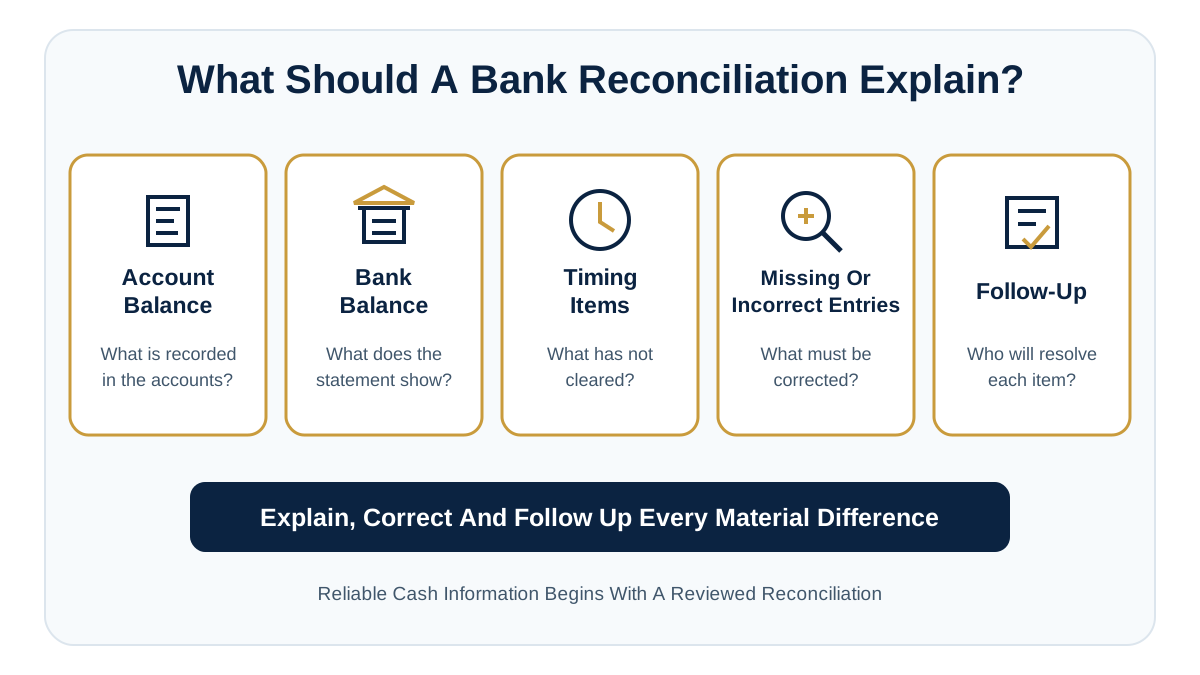
- Account Balance — What is recorded in the accounts?
- Bank Balance — What does the statement show?
- Timing Items — Which valid receipts or payments have not cleared?
- Missing Or Incorrect Entries — What must be recorded or corrected?
- Follow-Up — Who will resolve each outstanding item?
Bank charges, direct debits, customer transfers and errors that are missing from the accounts should be recorded or corrected promptly. Genuine timing items should carry a date, amount, reference and expected clearing period.
Old outstanding items should not be carried forward automatically. Investigate payments that have not cleared, deposits that do not appear and unusual or unsupported transactions.
Do not insert an unexplained balancing figure merely to make the totals agree. Assign an action owner and follow-up date to each material unresolved item.
Explain, correct and follow up every material difference. Reliable cash information begins with a reviewed reconciliation.