The Short Answer
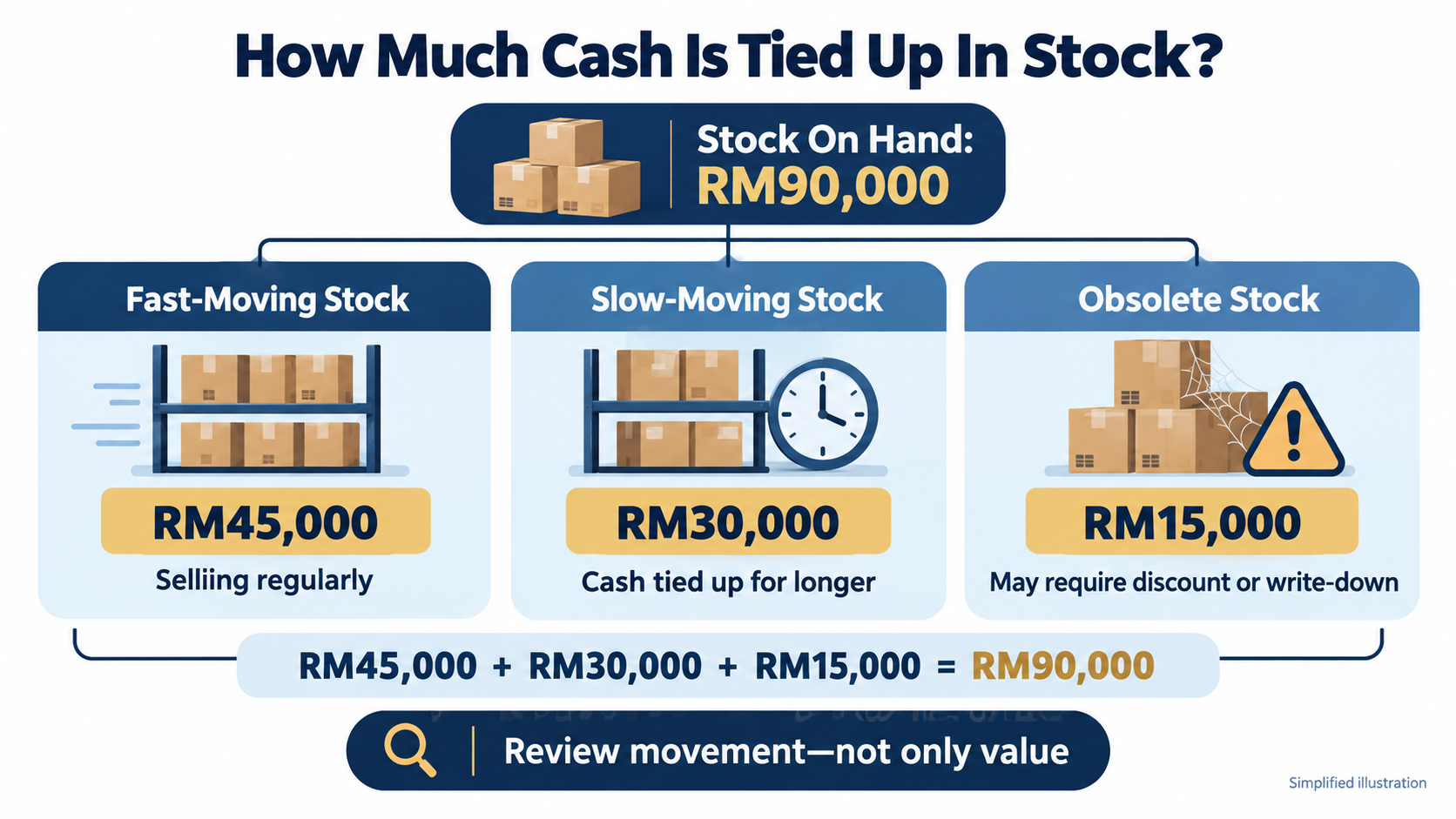
Start with a reliable stock listing valued at cost. Group the items by recent movement, then investigate material slow-moving and obsolete balances.
A Simple Example
RM45,000 is tied up in slow-moving and obsolete stock. Management should review the items behind that amount before purchasing more.
What Each Category Means
Turn The Review Into Action
Read The More Detailed Answer
Begin With A Reliable Stock Listing
Use a stock listing as at a clear date, showing item code, description, quantity, unit cost and total cost. Reconcile its total to the inventory balance in the accounts. Investigate negative quantities, duplicate items, old outstanding receipts and unexplained differences.
Confirm Quantity And Condition
Accounting records may show stock that is missing, damaged, expired or unsuitable for sale. Use regular cycle counts and periodic physical counts to confirm that quantities exist and are in saleable condition.
Measure Movement Consistently
Set practical movement bands for the business—for example, items sold or used within 90 days, 91–180 days and over 180 days. The correct bands depend on the normal operating cycle. Seasonal, strategic and essential spare stock should be reviewed separately rather than automatically labelled unnecessary.
Calculate Stock Days
Stock days provide a broad measure of how long inventory is held. Use average stock because the closing balance alone may be unusually high or low.
For example, average stock of RM90,000 and annual cost of sales of RM540,000 gives approximately 61 stock days: RM90,000 ÷ RM540,000 × 365.
Estimate The Cash Opportunity Carefully
The full stock balance cannot normally be released without affecting sales or production. Estimate the quantity genuinely required for normal operations, then review the excess above that level item by item.
Review Purchasing And Reorder Controls
Slow stock often grows because purchasing decisions are based on habit, large minimum orders, outdated forecasts or weak approval controls. Review reorder points, order quantities, supplier lead times and demand forecasts. Link purchasing approval to existing stock and outstanding purchase orders.
Monitor The Position Monthly
Track total stock, stock days, slow-moving value, obsolete value, write-downs and stock differences. Assign owners to material items and record the action and review date. The objective is not simply to reduce stock; it is to hold enough of the right stock while avoiding unnecessary cash commitment.
Avoid These Mistakes
- Reviewing only the total stock value.
- Assuming every recorded item physically exists.
- Treating all slow-moving stock as unnecessary.
- Ordering more without checking stock already on hand.
- Assuming recorded cost equals recoverable cash.
Quick Review
- Does the stock listing agree with the accounts?
- Are quantities and condition physically verified?
- Which items are slow-moving or obsolete?
- What purchases can be reduced or postponed?
- Who owns each action and review date?
Key Takeaway
Review stock movement—not only stock value. Identify where working capital is committed, protect essential stock and take action on excess, slow-moving or obsolete items.
This guide provides general educational information. Inventory valuation, write-down, tax and disposal decisions should be assessed using the business’s circumstances and appropriate professional advice.