The Short Answer
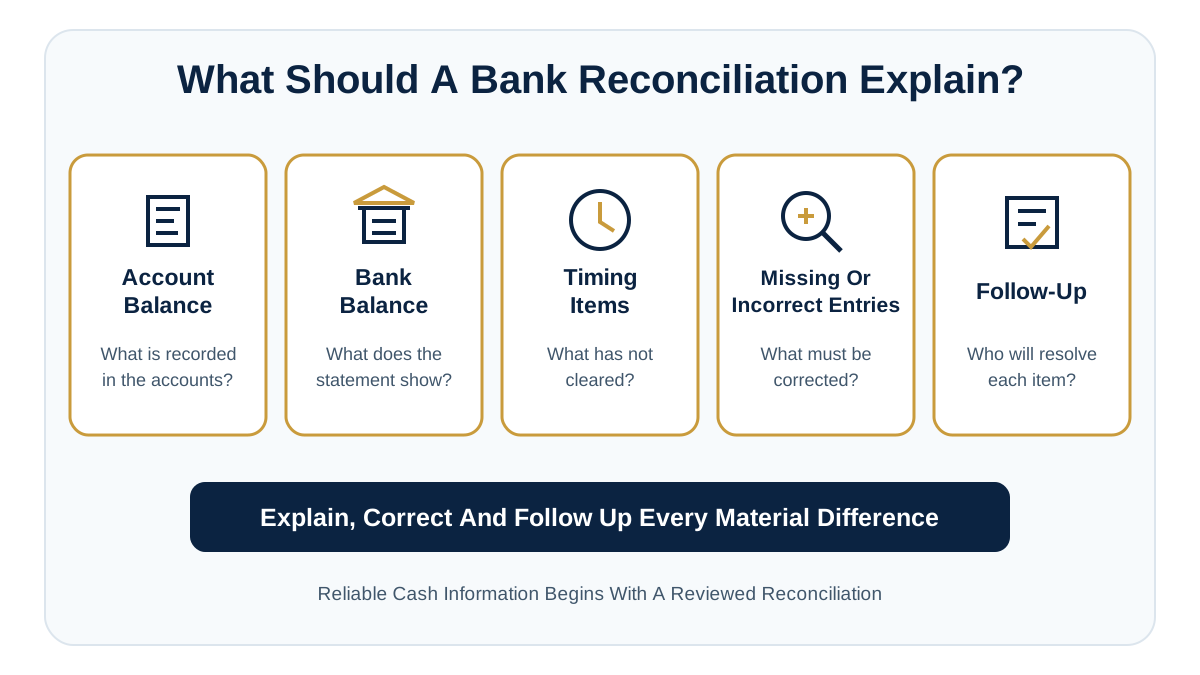
Compare the cash or bank balance in the accounting records with the balance on the bank statement at the same date. Separate genuine timing differences from entries that are missing, duplicated or incorrect. Correct the accounting records promptly and assign someone to resolve every material outstanding item.
A Simple Example
At month-end, the bank statement shows RM27,400. After recording a customer transfer and bank charges that were missing from the accounts, the adjusted accounting balance is RM25,900.
The balances agree only after missing accounting entries are posted and valid timing differences are explained. The RM2,500 and RM4,000 should remain on the follow-up list until they clear.
Read The More Detailed Answer
Use The Same Cut-Off Date
Start with the bank ledger or cash-book balance and the bank statement balance at the same closing date. Confirm that all statement pages and relevant accounts are included. A comparison using different dates cannot produce a meaningful reconciliation.
Update The Accounting Records First
Identify items already processed by the bank but not yet recorded in the accounts. These may include bank charges, interest, direct debits, standing instructions, card settlements, customer transfers and rejected receipts. Post valid entries and correct duplicates or incorrect amounts before finalising the reconciliation.
Explain Genuine Timing Differences
A payment recorded in the accounts may not yet have cleared the bank. A receipt recorded near month-end may not yet appear on the statement. These can be valid timing items, but each should have a date, amount, reference and expected clearing period.
Old timing items should not be carried forward automatically. A long-outstanding payment may have been cancelled, duplicated or never received by the supplier. A deposit that does not appear promptly may require investigation.
Investigate Unexplained Or Unusual Items
Do not force the reconciliation by inserting a balancing figure. Trace unexplained differences to source documents, payment records, deposit slips, online-banking references and accounting entries. Escalate unfamiliar beneficiaries, altered bank details, repeated payments and unsupported transfers.
Keep A Follow-Up Record
The reconciliation should show who will resolve each material item and the agreed follow-up date. At the next review, confirm whether the item cleared, was corrected or still needs action.
Review And Approve The Reconciliation
Where practical, someone independent of day-to-day payment processing should review the reconciliation, supporting statement, corrections and old outstanding items. The reviewer should sign or record approval only after material differences are supported and follow-up actions are clear.
Avoid These Mistakes
- Comparing balances from different dates.
- Leaving bank charges, transfers or direct debits unrecorded.
- Treating every difference as a timing item without evidence.
- Using an unexplained balancing figure to make the totals agree.
- Carrying old outstanding items forward without investigation.
- Preparing the reconciliation without an appropriate review.
Quick Review
- Accounting and bank balances use the same closing date
- Missing and incorrect accounting entries are posted
- Every timing item has supporting details
- Old and unusual items are investigated
- Actions have an owner and follow-up date
- The completed reconciliation is independently reviewed where practical
Key Takeaway
A reliable bank reconciliation should explain, correct and follow up every material difference. It turns the bank balance into information management can use with greater confidence.
This guide is general educational information. The appropriate accounting treatment and control process depend on the transaction, business and applicable reporting requirements.