The Short Answer
Review an updated accounts receivable ageing report. Confirm that invoices and customer payments are recorded correctly, then separate amounts that are not yet due from those that are overdue.
Read The Ageing Report
A Simple Example
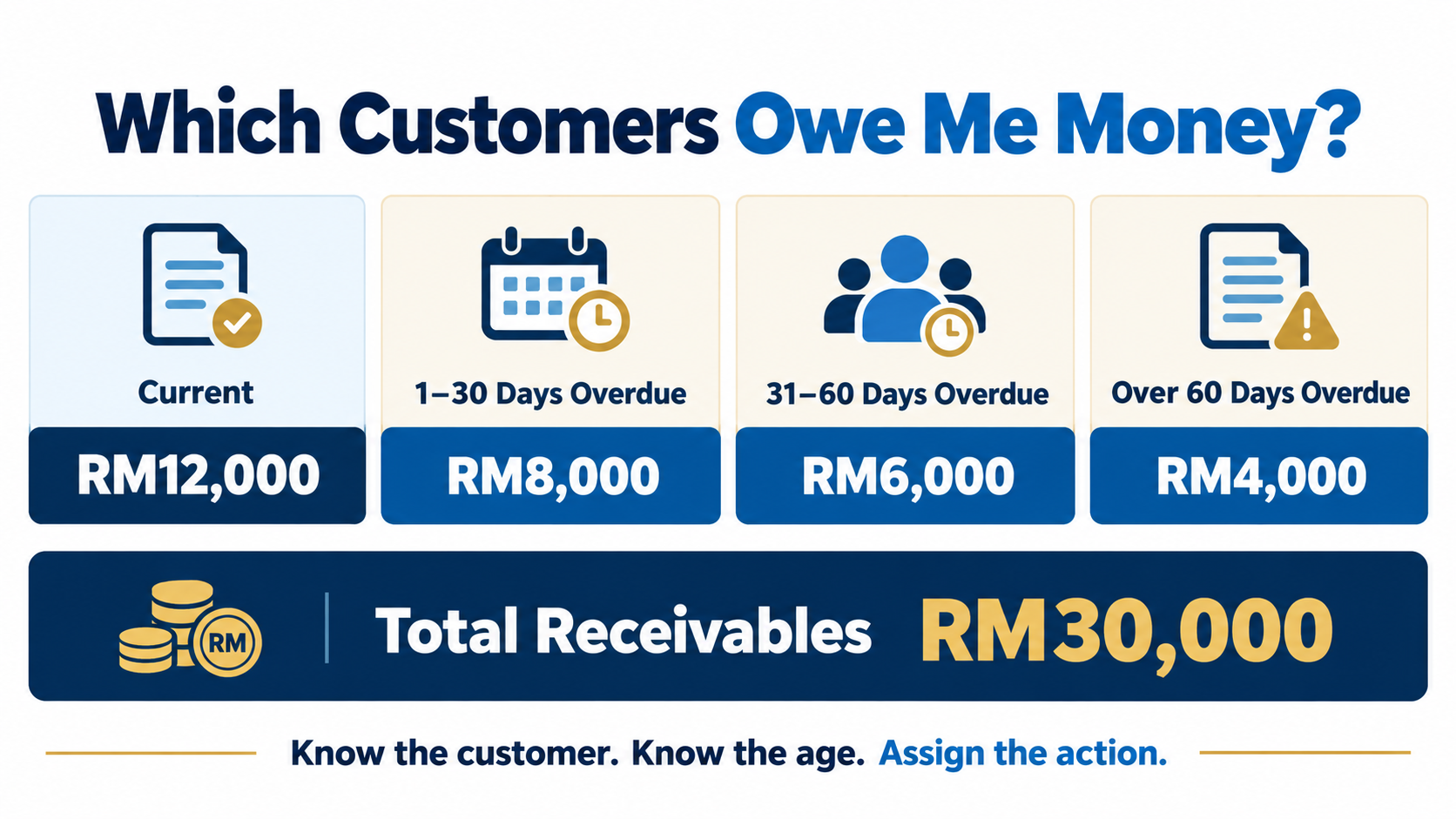
This illustrative report reconciles to total receivables of RM30,000.
RM18,000 is overdue. Management should identify the customers and invoices behind that amount rather than relying only on the total.
Turn The Report Into Action
Read The More Detailed Answer
Begin With A Reliable Report
Generate the ageing report from the customer ledger as at a clearly stated date. Reconcile its total to the accounts receivable balance in the general ledger. Investigate differences before using the report for decisions.
Post customer receipts, credit notes and approved adjustments promptly. Otherwise, staff may chase invoices that have already been paid or overlook amounts that remain outstanding.
Age Invoices Consistently
Age invoices from the contractual due date. Confirm that agreed credit terms are recorded correctly and use the same method each month.
Review Customers, Not Only Totals
For each material balance, list the invoice number, due date, amount, contact person, reason for delay, promised payment date and staff member responsible. Separate genuine disputes, missing documents, payment plans and customers who have not responded.
Review concentration too. One customer may represent most of the risk even when the total overdue balance appears manageable.
Set Collection Priorities
Keep a record of calls, emails, commitments and next steps. Obtain appropriate advice before legal recovery action.
Connect Collections To Cash Planning
An ageing report shows what is owed; it does not guarantee when cash will arrive. Put realistic promised payment dates into the cash forecast and test the effect of delays.
Review Credit Risk Weekly
Repeated late payment may require new credit limits, deposits, milestone billing or shorter terms. Assign an owner to each material action and update the collection list every week. Consider whether any balance may be irrecoverable with appropriate accounting, tax and legal advice.
Avoid These Mistakes
- Reviewing only the total receivables balance.
- Leaving receipts or credit notes unallocated.
- Ageing invoices from the wrong date.
- Accepting repeated promises without follow-up.
- Failing to assign an owner and next action.
Quick Review
- Does the ageing total agree with the accounts?
- Which customers and invoices are overdue?
- Why has each material invoice not been paid?
- Who owns the next action and by what date?
- Are collection dates reflected in the cash forecast?
Key Takeaway
Do not manage receivables as one number. Know the customer, invoice, age, reason, responsible person and next action for every material overdue balance.
This guide provides general educational information. Collection, credit, accounting, tax and legal decisions should be assessed using the business’s circumstances and appropriate professional advice.