The Short Answer
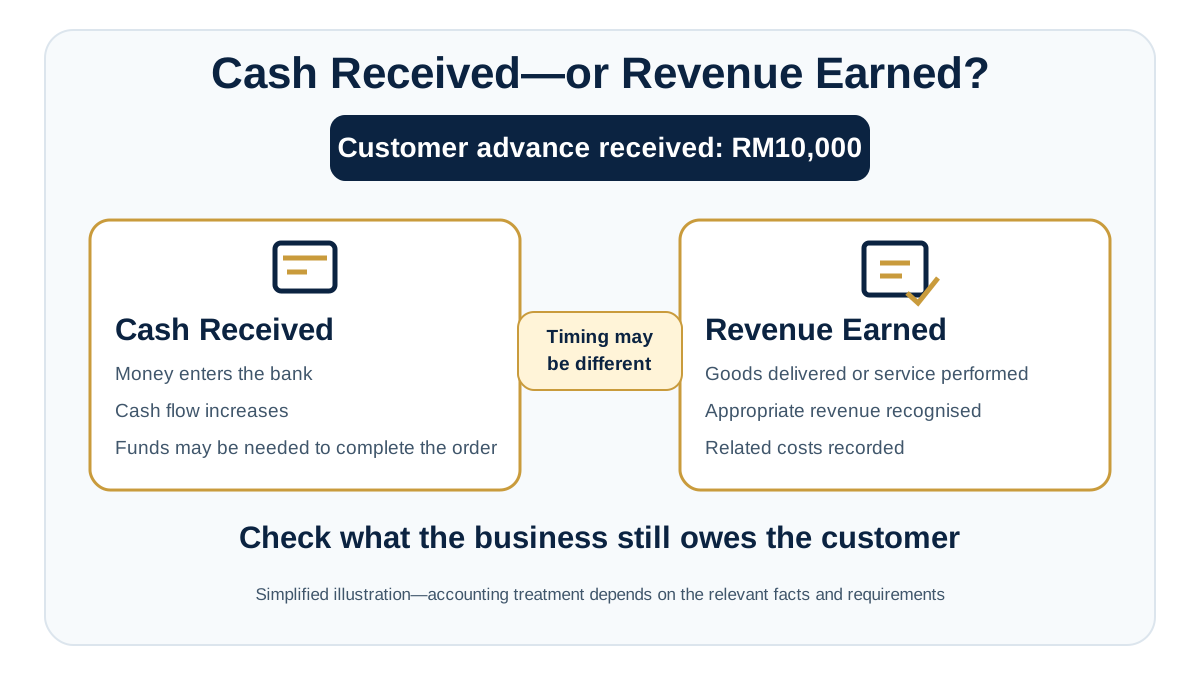
When a customer pays in advance, cash increases immediately. Revenue is recognised only to the extent that the relevant goods or services have been provided and the amount has been earned under the applicable accounting requirements.
A Simple Example
On 9 October, a customer pays RM10,000 in advance for an order that will be delivered later.
The RM10,000 improves the bank balance immediately, but it should not automatically be treated as earned revenue on the day it is received.
Why The Difference Matters
Read The More Detailed Answer
Begin With The Customer Agreement
Review what the customer ordered, the agreed price, payment terms, delivery requirements, acceptance conditions and refund provisions. The accounting should reflect the commercial substance of the arrangement rather than only the invoice or payment date.
Trace The Transaction Evidence
Follow the transaction from the customer order to payment, delivery, acceptance, invoicing and accounting entry. Evidence may include a quotation, purchase order, sales order, bank receipt, delivery order, job-completion record, customer acceptance and final invoice.
Recognise Partial Completion Carefully
Some arrangements are completed at one point, while others are delivered in stages. If only part of an order has been completed, the appropriate accounting may differ from recognising either nothing or the full amount. Confirm the facts, applicable reporting requirements and the business’s consistent accounting policy.
Record The Remaining Customer Obligation
Before the revenue is earned, the accounts should make the outstanding obligation visible. The account name may vary with the accounting system and applicable requirements—for example, customer advance, deferred income or contract liability. The important point is that the amount is not hidden inside sales merely because the cash has been collected.
Match Related Costs To The Activity
Recording revenue without the related cost can overstate profit. Check materials, subcontractors, delivery, commissions and other direct costs connected with the order. The timing of cost recognition should be reviewed together with the timing of revenue recognition.
Include Advances In Cash Planning
A customer advance is real cash and should appear in the cash forecast when received. However, management should also forecast the future payments required to fulfil the order. Separate the amount available for general use from cash that will be needed for materials, labour, delivery or possible refunds.
Reconcile Customer Advances Regularly
Maintain a listing by customer and order showing the opening advance, new receipts, revenue recognised, refunds and closing balance. Reconcile the listing to the general ledger and investigate old advances, completed orders not cleared and balances without supporting documents.
Avoid These Mistakes
- Recording every customer receipt as sales automatically.
- Recognising the full order before confirming delivery or performance.
- Using the cash without planning the cost of completing the order.
- Recording revenue and related costs in inconsistent periods.
- Leaving old customer advances unreconciled.
Quick Review
- What exactly has the customer paid for?
- What has been delivered or performed as at the reporting date?
- What does the business still owe the customer?
- Are the related costs recorded in the appropriate period?
- Does the customer-advance listing agree with the accounts?
Key Takeaway
Cash received is not automatically revenue earned. Check what has been delivered, what remains outstanding and how much of the receipt should be recognised under the relevant facts and accounting requirements.
This is a simplified educational illustration. The accounting treatment depends on the contract, transaction facts and applicable financial-reporting requirements. Obtain appropriate professional advice where necessary.