The Short Answer
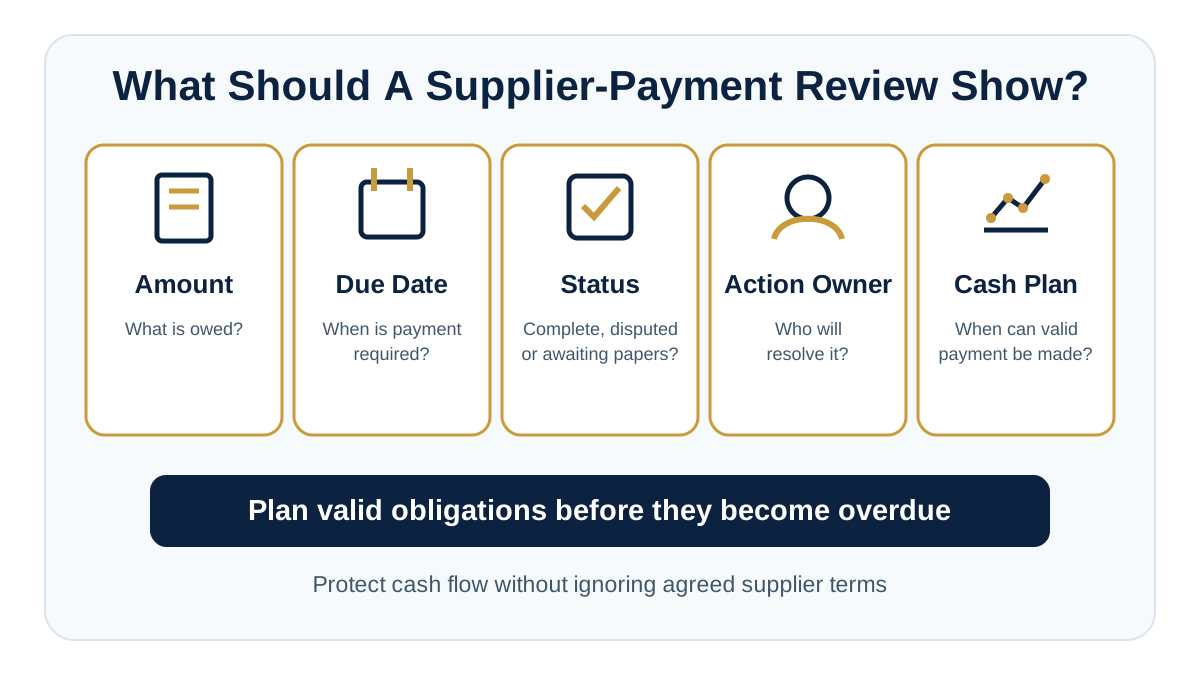
Prepare a weekly supplier-payment review that answers five questions for every material balance.
A Simple Example
The accounts show RM25,000 payable, but only RM12,000 is currently complete and approved. The remaining RM13,000 still requires action—it should not simply be ignored or treated as available cash.
Decide The Next Action
Read The More Detailed Answer
Start With A Reliable Supplier Ageing Report
Use a report prepared as at a clear date and reconcile its total to the accounts payable control balance. The report should identify the supplier, invoice or credit note, document date, due date, outstanding amount and ageing band. Investigate debit balances, duplicate invoices and old unmatched items.
Use Due Dates—Not Only Invoice Dates
An invoice may be old without being overdue if longer credit terms were agreed. Another invoice may become overdue quickly because the supplier allows only a short payment period. Calculate the due date from the verified contractual terms and retain evidence of any agreed exception.
Confirm The Obligation Before Payment
Match the supplier invoice to the purchase order, delivery evidence or service confirmation and the approved price. Check the supplier name, bank details, tax treatment, quantity and arithmetic. Changes to bank details require independent verification using an authorised contact—not only the contact information in the change request.
Separate Disputes From Cash Shortages
A genuine dispute concerns whether the amount or obligation is correct. A cash shortage means a valid obligation cannot be paid on time. Do not label a payment as “disputed” merely because cash is tight. Record the real reason so management can take the correct action and communicate honestly with the supplier.
Link Payments To The Cash Forecast
Place complete and expected supplier payments into the rolling cash forecast by realistic payment date. Include payroll, tax, loans and other commitments so the business does not approve a supplier-payment run in isolation. If the forecast shows a shortfall, review collection actions, non-essential spending and available funding before the due date.
Protect Supplier Relationships
Valid obligations should be paid according to agreed terms. When an exception arises, contact the supplier early, explain the specific issue and agree the next action. Repeated late payment can affect credit limits, supply continuity, pricing and trust. Good cash control does not mean delaying every supplier.
Review The Position Every Week
Use a consistent cut-off day. Focus on overdue items, payments due within the next two to four weeks, large or critical suppliers, disputes, missing documents and promised payment dates. Record the person responsible and follow up until each exception is closed.
Avoid These Mistakes
- Paying from supplier statements without checking the underlying invoices.
- Reviewing only the total payable and overlooking due dates.
- Leaving disputes and missing documents without an owner.
- Changing bank details without independent verification.
- Delaying valid obligations without speaking to the supplier.
Quick Review
- Does the supplier ageing report agree with the accounts?
- Which invoices are overdue or due within the next four weeks?
- Which balances are complete, disputed or awaiting documents?
- Has each exception been assigned to a person and date?
- Are valid payments included in the cash forecast?
Key Takeaway
Plan valid obligations before they become overdue. Confirm what is owed, resolve exceptions quickly and protect cash flow without ignoring agreed supplier terms.
This guide provides general educational information. Contractual, tax and legal matters should be assessed using the business’s circumstances and appropriate professional advice.